

On 22 September 2026, IRD Engineering successfully hosted the workshop “Full-Scale Service Level Agreement (SLA): Concepts and Draft Structure” at the Hilton Hotel in Belgrade, gathering representatives from the Ministry of Construction, Transport and Infrastructure, Roads of Serbia (PERS), and the project team under the EU-funded project “Support in Implementation of the Service Level Agreement (SLA) and Further Development of Performance-Based Maintenance (PBMC)”.
The workshop marked an important milestone in Serbia’s ongoing road sector reform, which aims to strengthen the planning, financing, monitoring, and delivery of road maintenance services through the adoption of Service Level Agreements and Performance-Based Maintenance Contracts. Serbia’s national road network, which carries approximately 90% of passenger traffic and 80% of freight transport in the country, represents a critical national asset whose long-term sustainability depends on more efficient maintenance management and investment planning.
Funded by the European Union through the Instrument for Pre-Accession Assistance (IPA) and managed by the Delegation of the European Union to the Republic of Serbia, the project is being implemented by a consortium led by IRD Engineering, together with DRI upravljanje investicij d.o.o. and VZB Capital & Advisory. Over a 36-month period, the consortium is supporting the development of a comprehensive framework for result-based road maintenance financing, including a methodology for multi-annual maintenance programming, enhanced tender documents for PBMC contracts, a technical rulebook for road maintenance, upgrades to the Road Asset Management System, and a structured capacity-building programme for key stakeholders.
The workshop, dedicated to Project Activity 8, focused on the concept and structure of the future full-scale SLA, its current stage of development, and the roadmap for implementation. Particular attention was given to the development of Key Performance Indicators (KPIs), service levels, and performance measurement mechanisms designed to align maintenance activities with the strategic and operational objectives of Roads of Serbia.
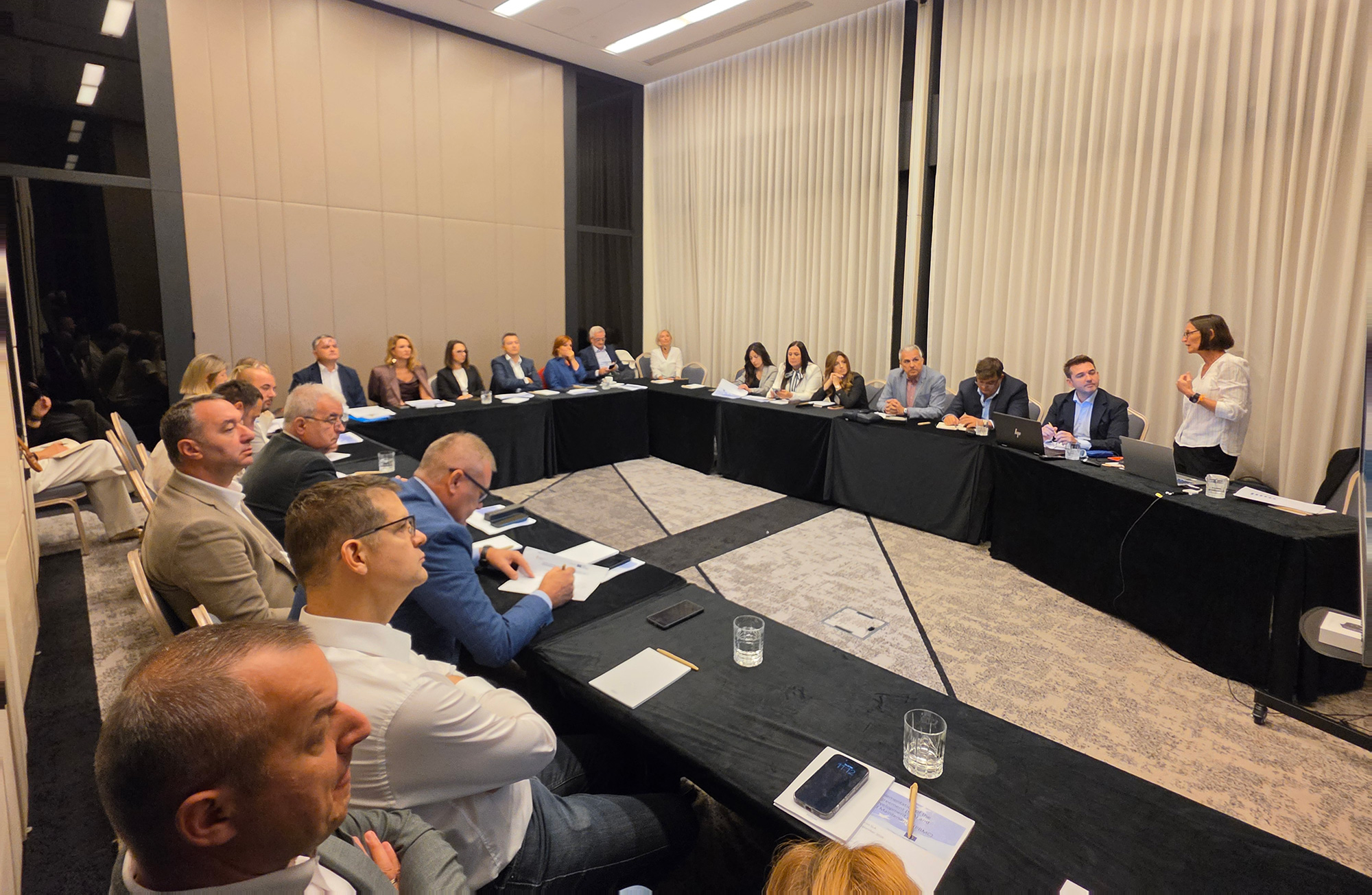
Participants reviewed a comprehensive indicator framework structured around four strategic pillars: Network, Delivery, Systems, and Public Value. The proposed KPI portfolio covers a broad range of performance areas, including network condition, maintenance backlog, investment plan implementation, PBMC performance, road safety, RAMS/BMS/ERP systems, Intelligent Transport Systems (ITS), data quality, budget execution, customer complaints, environmental sustainability, and energy efficiency.
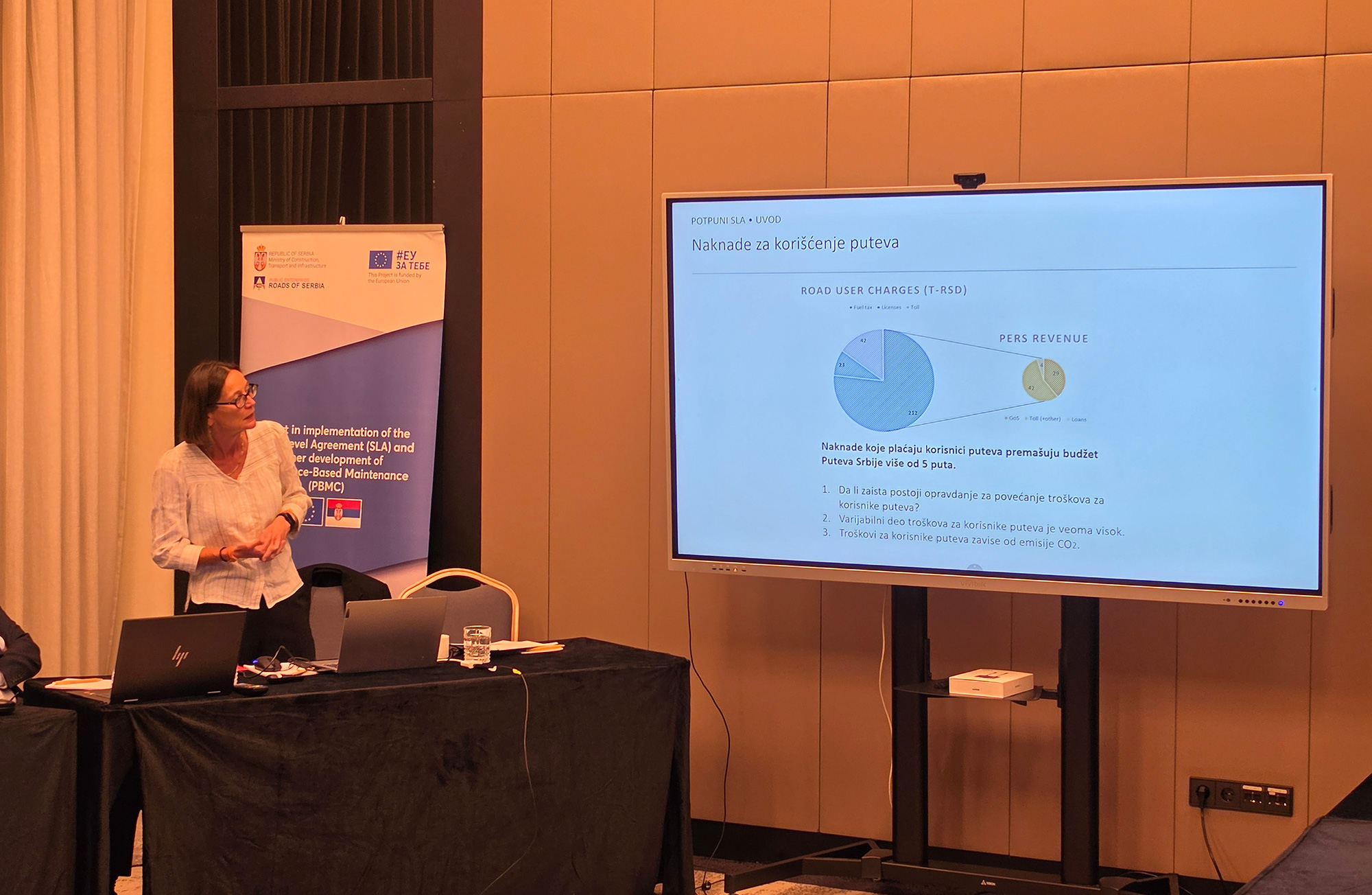
A significant part of the discussion focused on the current financial challenges facing the road sector, including the accumulated maintenance backlog, road user charge revenues, and the consequences of budget constraints on network condition and service quality. Within this context, the SLA framework was presented as a strategic management tool capable of establishing clear priorities, supporting evidence-based investment planning, increasing accountability, and improving the efficiency of maintenance expenditure.
The workshop also examined the proposed three-year investment and maintenance plan together with performance indicators for individual Roads of Serbia departments. The next phase of the project will involve further refinement of the KPIs by each department according to its specific responsibilities, operational targets, and performance objectives, ensuring that the final SLA framework is practical, measurable, and fully integrated into the organisation’s management processes.
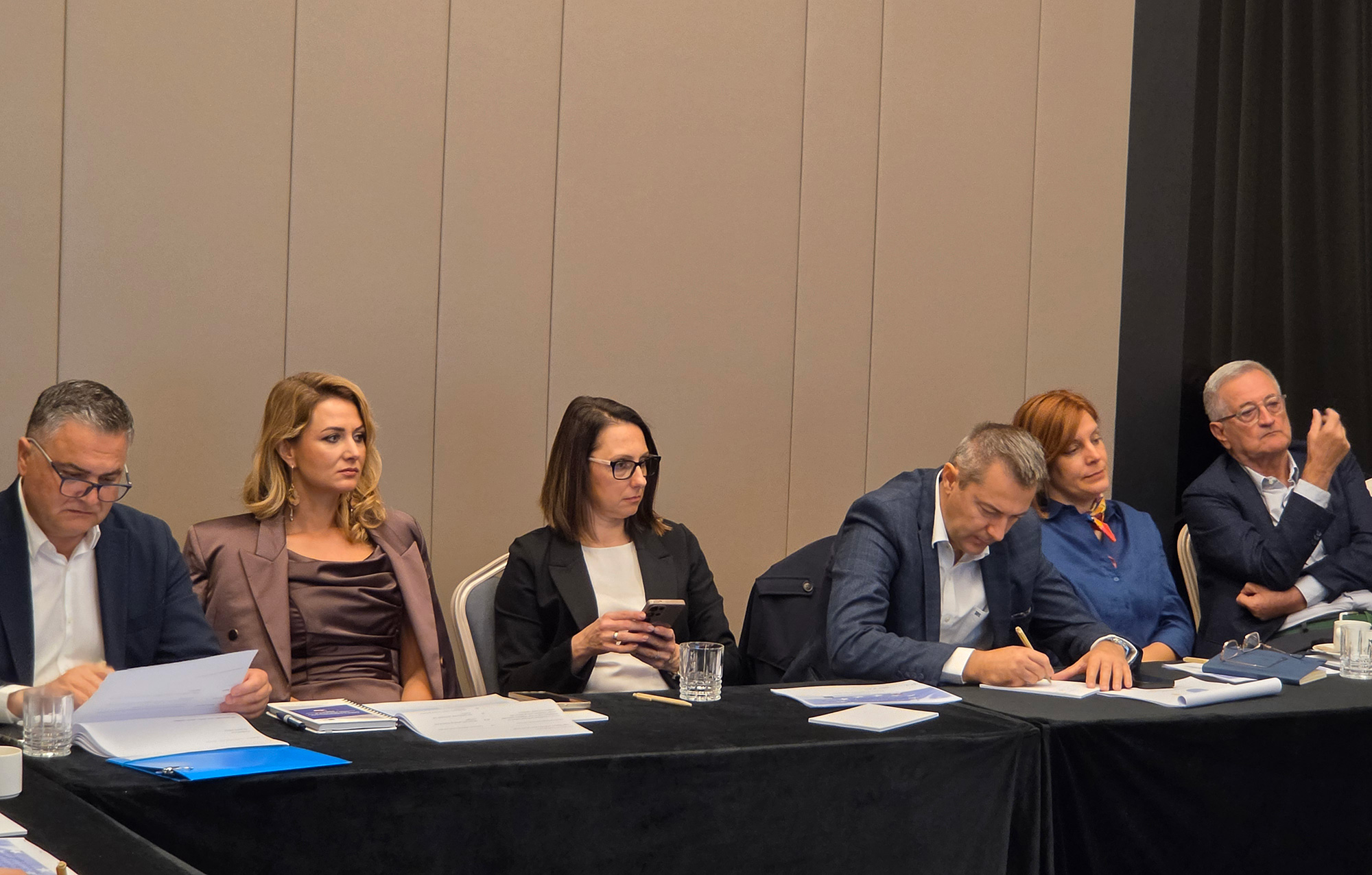
The active participation of senior management and technical experts demonstrated a strong institutional commitment to reform and highlighted the excellent cooperation between IRD Engineering, the Ministry, Roads of Serbia, the European Union, and all project stakeholders. The constructive exchange of views confirmed a shared vision for a more transparent, efficient, sustainable, and performance-oriented approach to road asset management in Serbia.
This initiative also reflects IRD Engineering’s broader commitment to strengthening institutional capacity in EU Candidate Countries and emerging markets. Through its Technical Assistance and Capacity Building practice, IRD supports governments and infrastructure agencies across the full project lifecycle, from strategic planning and institutional development to procurement, implementation, operation, and maintenance. The company’s expertise includes multisector infrastructure reform, harmonisation of public infrastructure organisations, procurement training aligned with International Financial Institution standards, and the development of sustainable approaches to infrastructure rehabilitation and maintenance.
IRD Engineering extends its appreciation to all participants and partners whose valuable contributions continue to advance Serbia’s transition towards a modern, performance-based road management system and support the long-term sustainability of the country’s transport infrastructure.